Well, maybe or maybe not. Irruption is not a terrible geologist misspelling of what volcanoes do, but is instead the rapid migration of a group of birds into an area where they are not commonly seen. They can be caused by many factors, most notably a seed or cone failure in areas where the birds normally range. Several birders in our county (Stanislaus) have noted a relative increase in sightings of Red-breasted Nuthatches (Sitta canadensis), which I can confirm because I actually saw one for myself this week on the campus at Modesto Junior College. Looking at the eBird map of Red-breasted Nuthatch sights this year does show a cluster of sightings in the town of Modesto.
The Red-breasted Nuthatches are pretty little birds, and I am thrilled every time I'm privileged to see one. They are found all over the United States and Canada, but they tend to prefer conifer forests of the north, and large-scale irruptions may involve many thousands of the birds invading the southern states. Ours probably are originating in the Sierra Nevada, and I suspect that when they invade our valley habitat, they are expressing a preference for the conifers that are often used for landscaping in our city environments.
In any case, this is the second time I've seen this individual in a week, high up in a pine tree next to the sheep enclosure on our west campus. Today was the first time I was able to catch a clear shot.
Showing posts with label Red-breasted Nuthatch (Sitta Canadensis). Show all posts
Tuesday, February 25, 2020
Thursday, October 10, 2019
The Elusive Quest: Finally, Pictures of a Red-Breasted Nuthatch
What a week! Back from a trip across the Sierra Nevada, I arrived home and made some interesting personal discoveries, including a Red-breasted Sapsucker on the Tuolumne, and the first sightings of Snow Geese and Greater White-fronted Geese on the same day. And then there was this morning...
Some birds are very rare, and I'll never see them at all, and there are some birds that are around, but I just never catch them. The Red-breasted Nuthatch (Sitta canadensis) is one of those birds. Prior to this year I had only seen one, a chance sighting in 2018 at Modesto Junior College. Ever since, I've been trying to see another, hoping to get better pictures than the fuzzy ones I got last year. My interest was piqued when local birders starting using the term 'irruption' in discussing the nuthatches. It seems that when major food sources fail in the normal home range of the bird, they will spread into new areas, and some suspected that we were in the midst of one based on a fairly high number of local sightings. So my 'spidey-sense' was on high alert.
I finally spotted one two weeks ago on campus, but I was victimized by a failing zoom lens on my camera (since replaced), and I only got two very poor pictures that served only to prove the identity of the bird. But this morning I was following the movements of some Cedar Waxwings when my eye caught movement in the deodar tree at my side. My new camera was working, and I finally got some reasonably sharp pictures of the beautiful little bird.
The nuthatches gained their name from their habit of jamming nuts into the bark of trees, and breaking loose the edible parts ("hatching" the seed). They also spend their time walking up and down the trucks of trees searching out bugs and spiders. They are found all over the United States and Canada, except by me; I don't find them very often. But on this day I got lucky!
Some birds are very rare, and I'll never see them at all, and there are some birds that are around, but I just never catch them. The Red-breasted Nuthatch (Sitta canadensis) is one of those birds. Prior to this year I had only seen one, a chance sighting in 2018 at Modesto Junior College. Ever since, I've been trying to see another, hoping to get better pictures than the fuzzy ones I got last year. My interest was piqued when local birders starting using the term 'irruption' in discussing the nuthatches. It seems that when major food sources fail in the normal home range of the bird, they will spread into new areas, and some suspected that we were in the midst of one based on a fairly high number of local sightings. So my 'spidey-sense' was on high alert.
I finally spotted one two weeks ago on campus, but I was victimized by a failing zoom lens on my camera (since replaced), and I only got two very poor pictures that served only to prove the identity of the bird. But this morning I was following the movements of some Cedar Waxwings when my eye caught movement in the deodar tree at my side. My new camera was working, and I finally got some reasonably sharp pictures of the beautiful little bird.
The nuthatches gained their name from their habit of jamming nuts into the bark of trees, and breaking loose the edible parts ("hatching" the seed). They also spend their time walking up and down the trucks of trees searching out bugs and spiders. They are found all over the United States and Canada, except by me; I don't find them very often. But on this day I got lucky!
Sunday, May 6, 2018
A Bird Who Didn't Want to be Seen: Red-Breasted Nuthatch on the West Campus
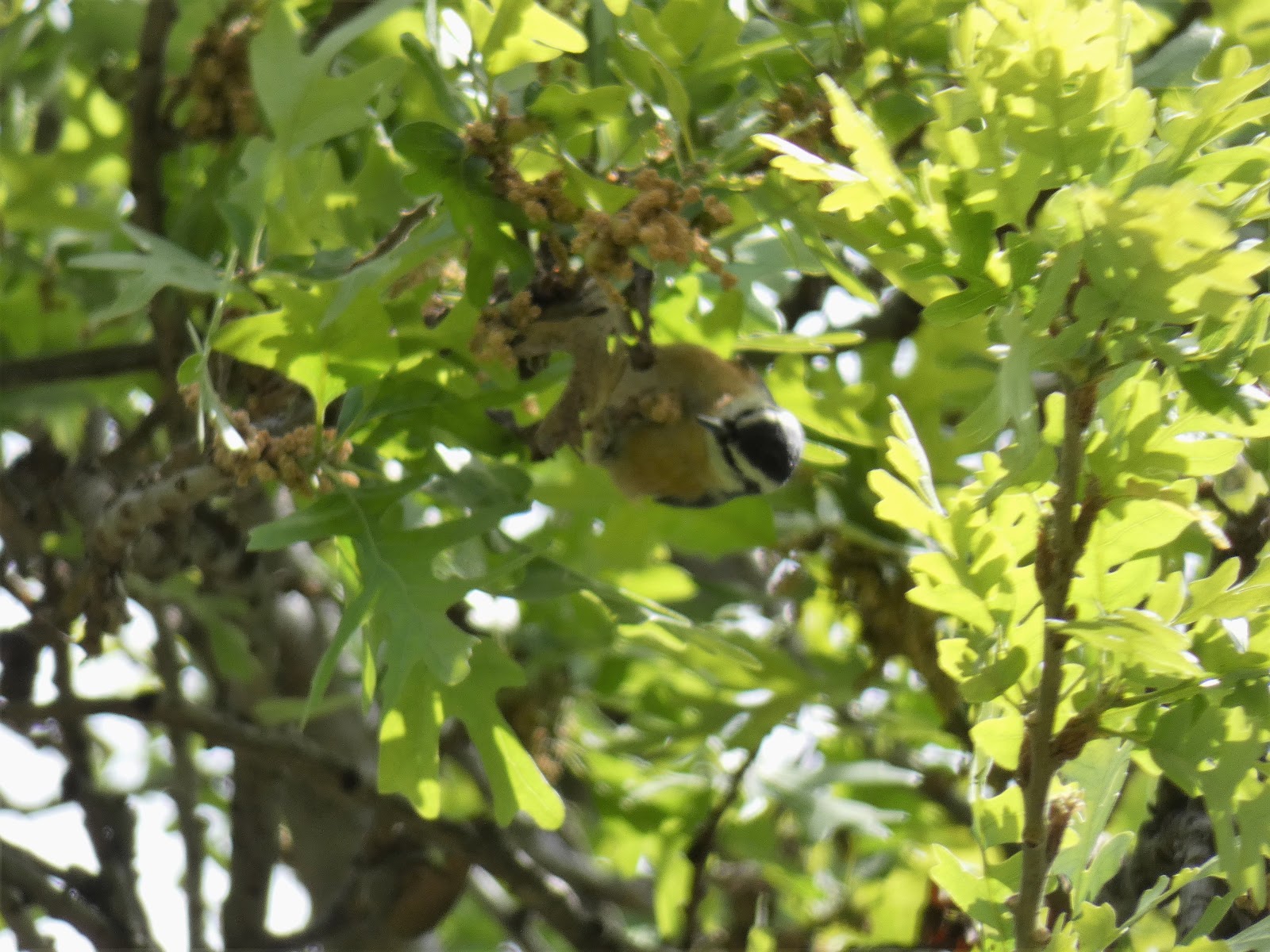
I'm a little behind on bird updates, as these pictures are from April 17. I'm not happy with the them, but then again I was lucky to see this bird at all. It's a Red-breasted Nuthatch (Sitta canadensis), and it was deep in the foliage of a tree on the West Campus of my college. It was the last week of classes, and I was stretching my legs during a break from grading. It's the first time I've seen one so I'm looking forward to getting better shots some day.
The Red-breasted Nuthatchers usually search for insects in the summer and later in the year they may switch to nuts (kind of like their name). They are more of a conifer forest species and are typically found at higher elevations outside the Great Valley. They range across North America from the Mexican border to Alaska.
Subscribe to:
Posts (Atom)