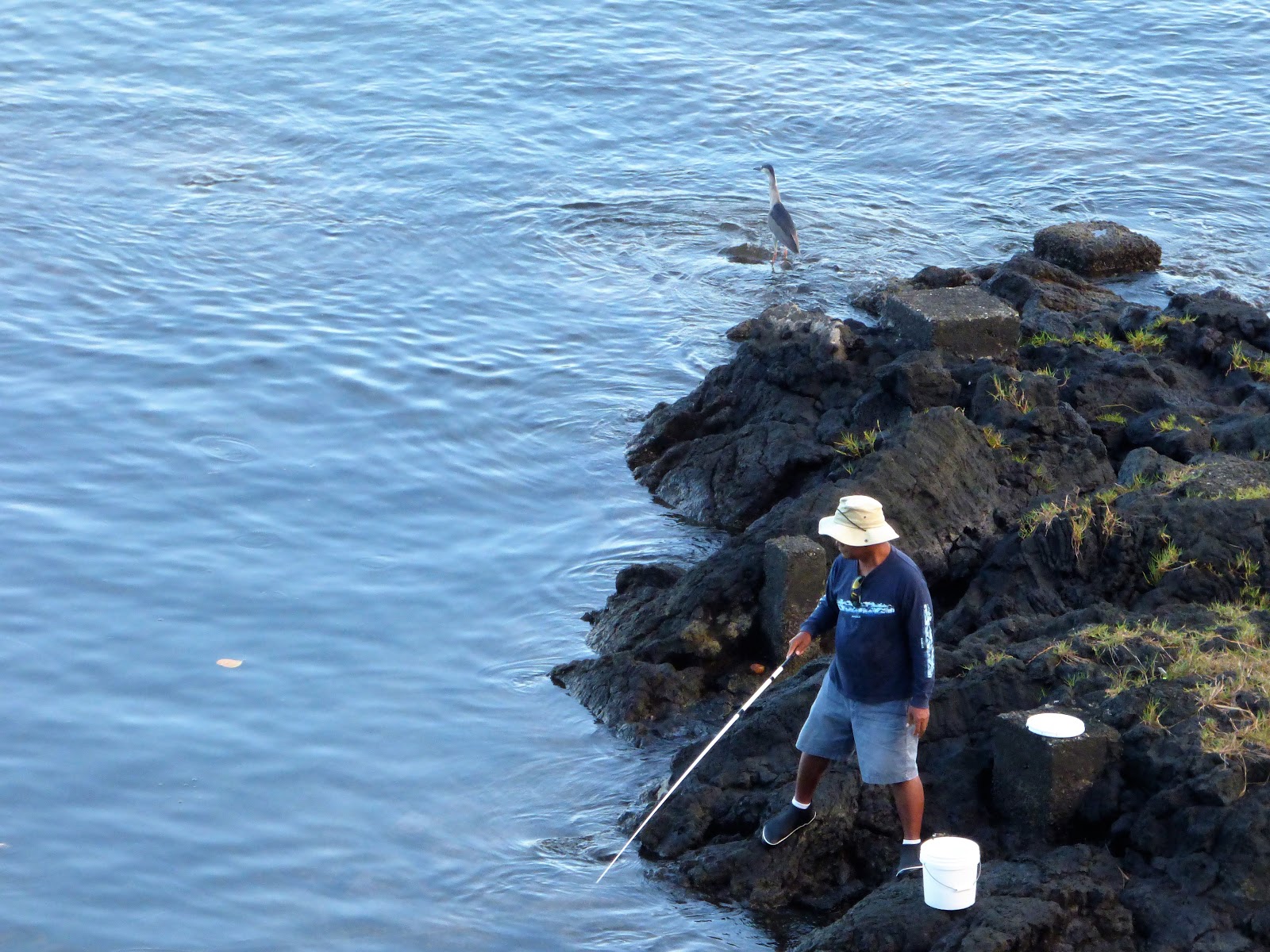
I'm back in the Hawaiian Islands this week! It explains the relative lack of blogging anywhere, and I have precious little time for hunting birds (the topic of the week is geology, and the excuse for being in the islands is a conference and conference-related field trip). But still, I watch for them when I can, and I had a good opportunity early this morning.
I was last here about a year ago, and
I had a short post showing the 'Auku'u (Black-crowned Night Heron;
Nycticorax nycticorax) at night searching for fish in Hilo Bay in front of the Hilo Hawaiian Hotel. I never got a good luck of the bird in the daytime. That changed this morning. I spied him from my window hanging out with the fishermen along the shore, and went downstairs to see if I could get a closer look. It didn't seem too concerned about humans, given that some were standing just a few yards away.
The 'Auku'u is of a special breed, that of a bird that is native to the Hawaiian Islands. The ancestors of this bird arrived by chance thousands of years, maybe tens of thousands of years ago and established populations here. Unlike other species which have undergone intense evolutionary change, the Heron is more or less indistinguishable from its mainland relatives. If you have good adaptations, you stick with them!