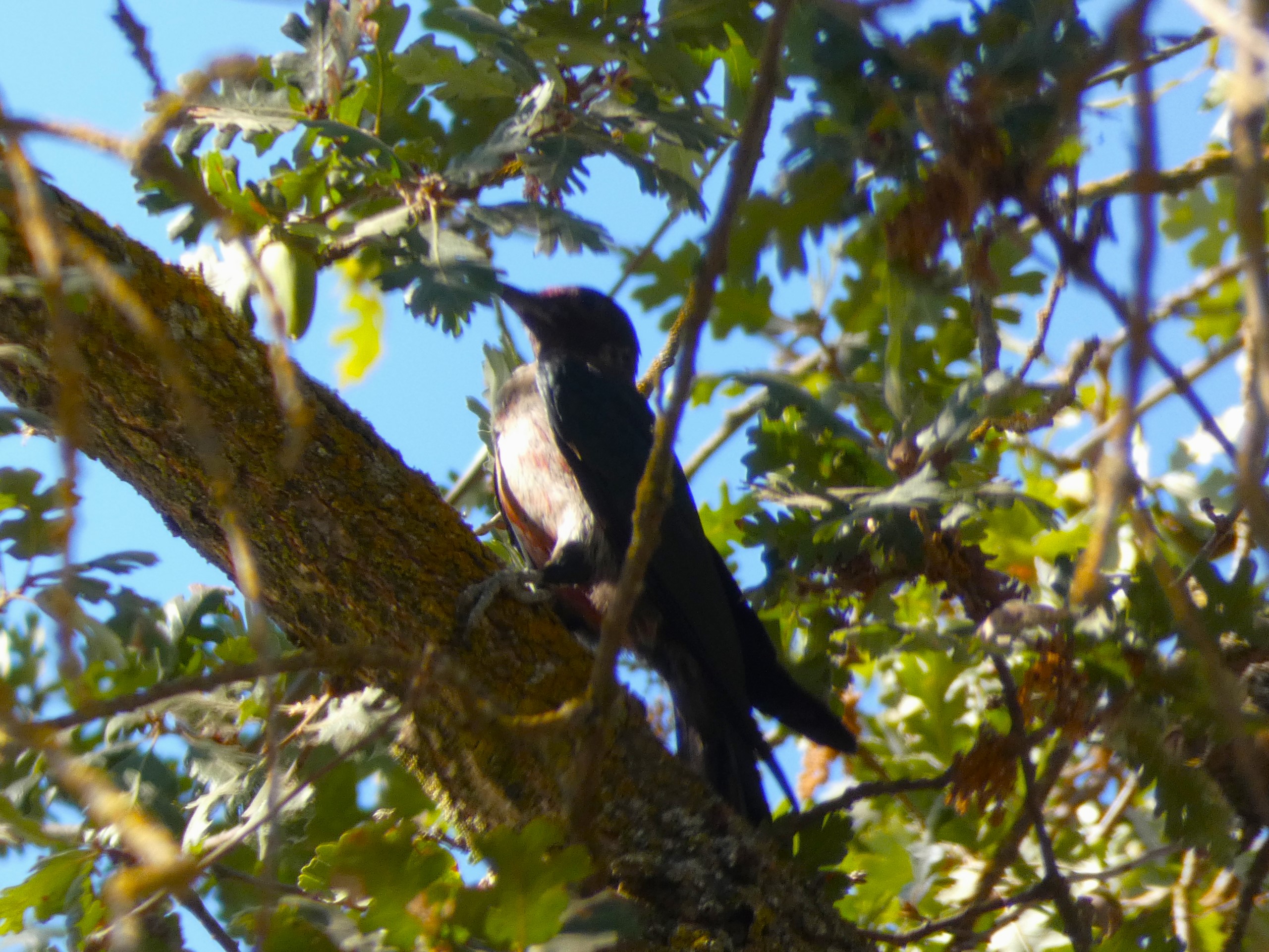
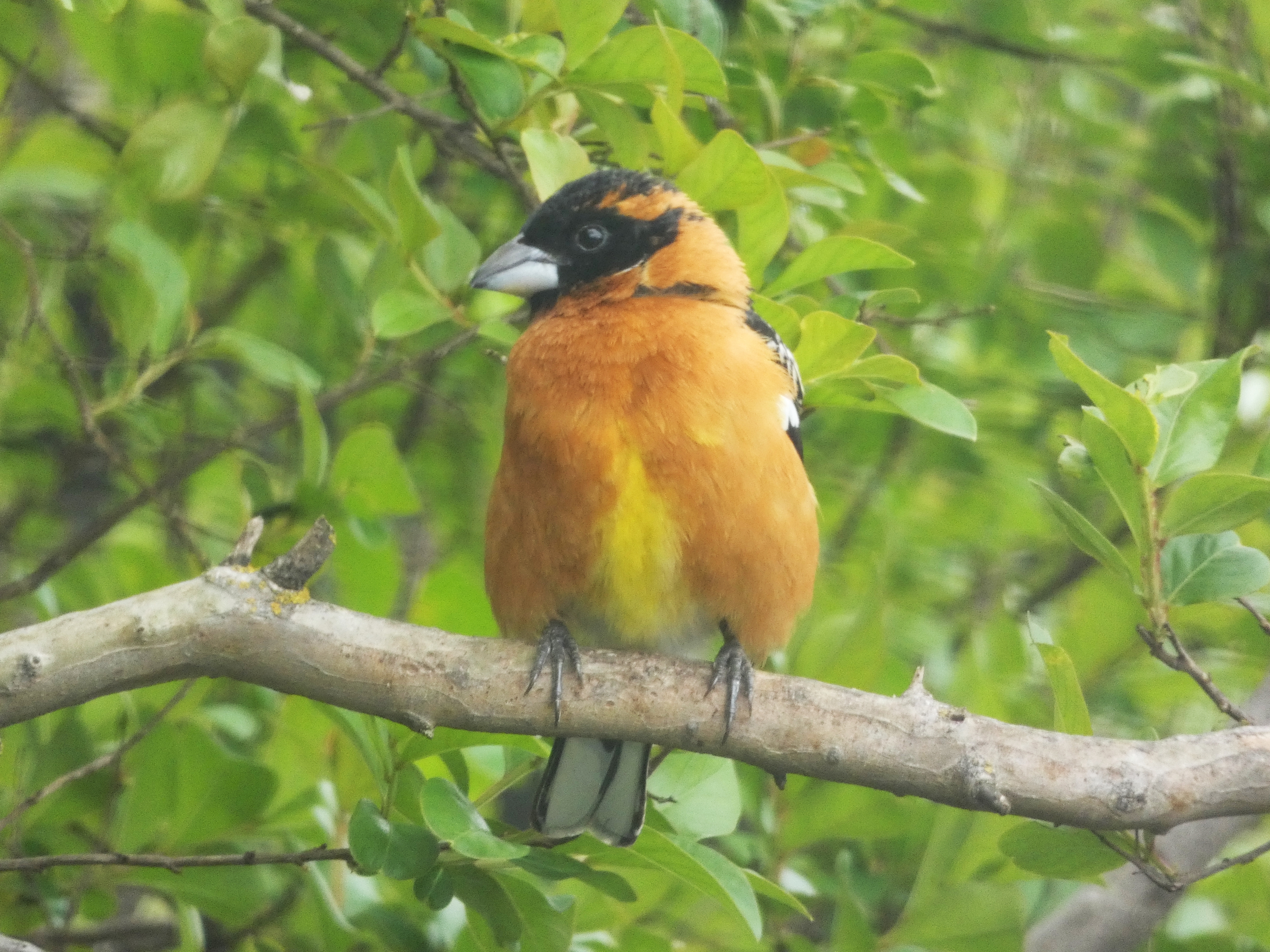
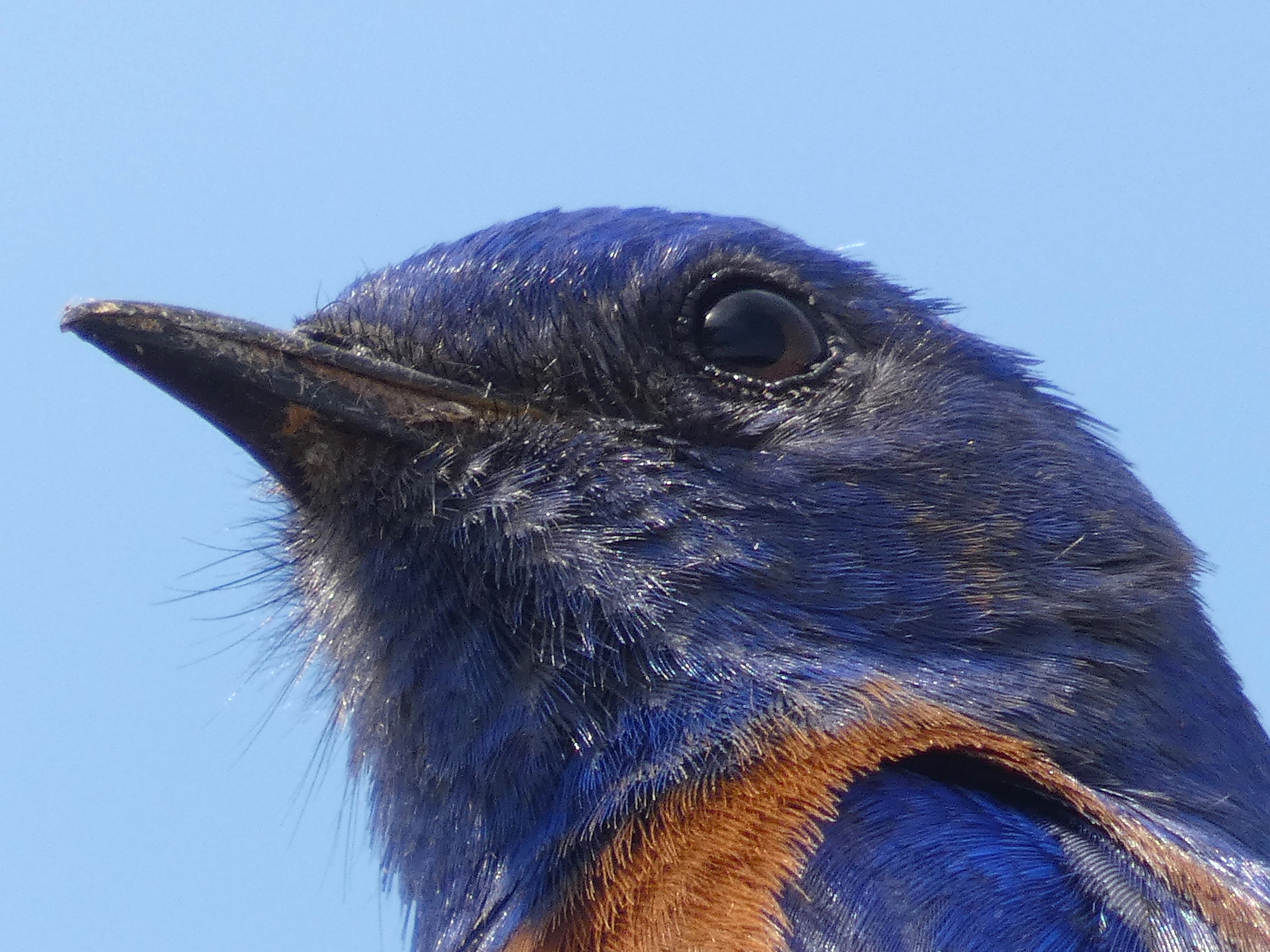
I've thought a lot about the fact that I have become "that guy" on the Tuolumne River Parkway Trail. People can see me from a long way off, the guy in the silly-looking hat who
always has binoculars and camera dangling off his shoulders, who can't walk in a straight line because his attention is always directed off to the side or above, essentially anywhere but the trail in front of him.
I have these conversations, sometimes imagined, sometimes real, where I feel just a little defensive and want to say "I'm not really a crazy birder, I'm just getting my regular exercise and I don't want to miss it if a really interesting bird or other animal shows up". But I actually am a crazy birder. But doing the same ritual practically everyday of walking at least two miles and counting birds along the way is not really that strange. Compare the strangeness of doing that with running on a treadmill in a gym every day. You run on top of the moving machine, and no scenery goes by. You maybe have a television on the side of the room to stare at, or you have earphones blaring music. To me that's pretty boring.
How cool is it that every single walk has the potential of becoming something wonderful? Like the dad said in
Christmas Story, referring to his yet unopened grand prize, "Why there could be anything in there!" Sure, there are birds that one sees every single day throughout the year, the scrub jays, the doves, the mockingbirds, the starlings. But there are almost always little surprises, the birds you see only once in awhile: Spotted Towhees, Nuttall's Woodpeckers, Belted Kingfishers, or Cooper's Hawks. They add that little bit of spice that turns a mundane walk into an interesting one.
But then there are the migrants. They can only be seen during part of the year, some only during the winter, others in the spring and summer. New seasons bring the promise of that "first of season" sighting, the excitement of seeing a beautiful and spectacular bird after an absence of many many months. It's a neat moment that sometimes takes my breath away. It happened yesterday when I saw the first Bullock's Oriole (Icterus bullockii) of the new year. The bird is not totally rare, and I will probably see a few dozen of them over the next few months, but that first moment you realize what you are seeing is just plain special. Especially when they hang out long enough to get pictures.

There are many more such moments coming over the next few months and one never knows what day it will happen. There will be the first Hooded Oriole, Lazuli Bunting, Black-headed Grosbeak, Green Heron, Olive-sided Flycatcher, Phainopepla, Rufous Hummingbird, and about twenty others before the end of the year. Every single day is a potential adventure.
Left unsaid of course is the even rarer potential of seeing a bird that you have never seen before, or one that no one in the county or state has ever seen. Climate change has resulted in some species ranging farther north than ever before, so the day may come when I will see something really special, like a Vermilion Flycatcher or Summer Tanager on the Tuolumne River. And that, my friends, is why I am "that guy" out there walking every day looking to the sky, instead of tromping on a machine at the gym.


%20Tropical%20Kingbird%20from%20Tuolumne%20River%20Trail.JPG)