Monday, September 26, 2022
Lewis's Woodpeckers on the Tuolumne Parkway Trail
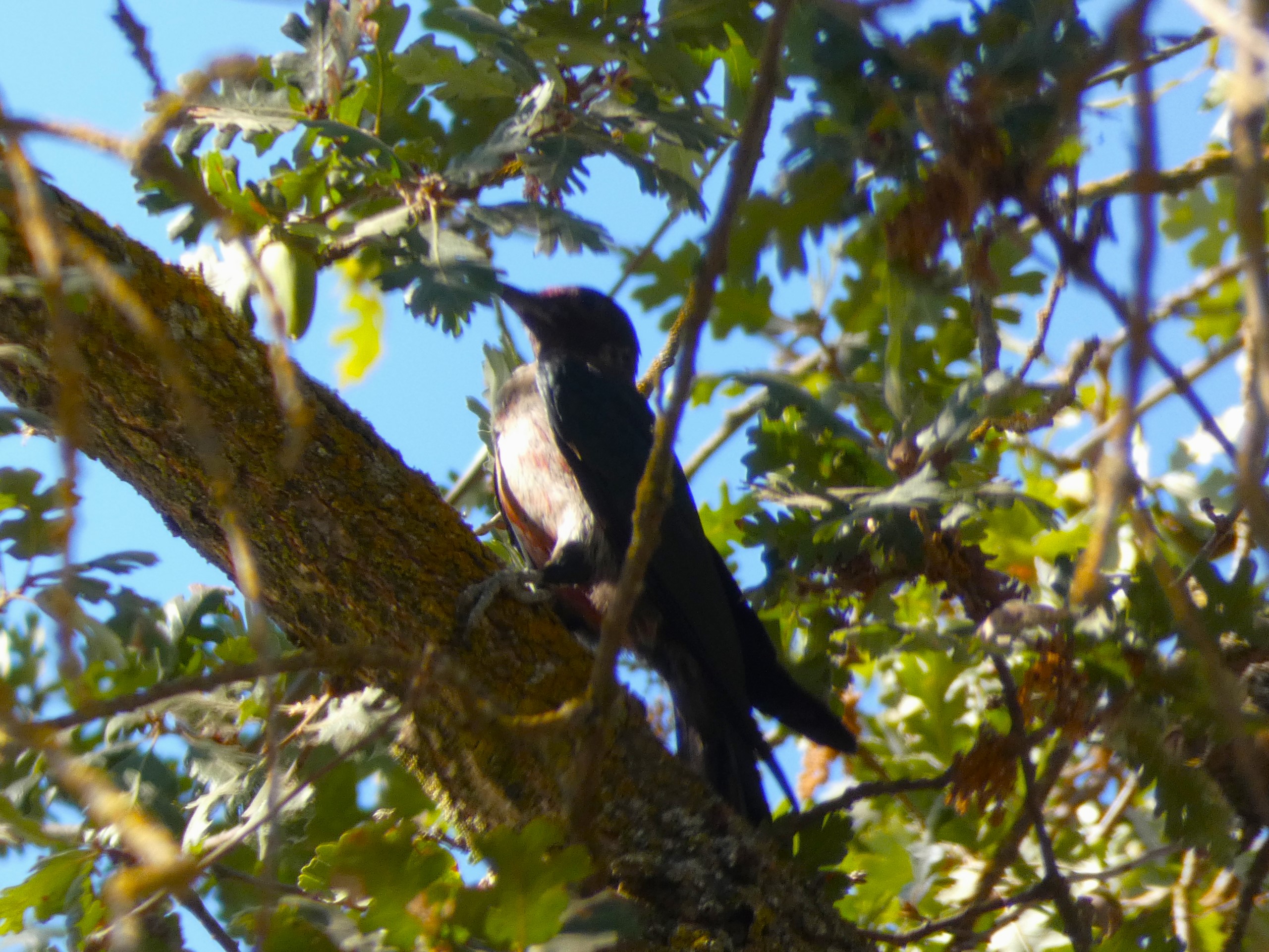
For being called 'woodpeckers', they don't seem to peck wood all that much, since they mostly eat insects that they catch on the fly, or nuts. They usually nest in hollows carved out by other woodpeckers. And their color scheme isn't all that woodpeckerish either, They have a dark green back and of all things, a pink breast. But they are interesting to see, especially when they are traveling out of their normal habitat.
Of course, when you see a new bird, you'll be fumbling with your camera to try to document its presence, and indeed that was the case with me. They were constantly moving and I only got a couple of fuzzy images, but at least you can see the odd color scheme. I sensed this small flock was on the move, but if I see them again, I'll try to get a few nicer shots and add them in!
Saturday, July 16, 2022
Anna's Hummingbird in the Back Yard
According to the Sibley guide, there are sixteen species of hummingbirds to be found in the American West, but in our county only six species have ever been noted. Of them only the Anna's Hummingbird is a year-round resident. Black-chinned Hummingbirds are relatively common during the summer, and Rufous Hummingbirds migrate through the region in the fall and spring. The other three are rarely seen.
Overall the lack of diversity simplifies hummingbird identification at our feeder. The orange-colored Rufous can't be mistaken, and the Black-chinned will have purple iridescence around the neck. The Anna's are magenta, although it's off a bit in these pictures because of the reflection of the feeder.
I do wish they would get along at our feeder. They are territorial about their food supply and will spend more time chasing intruders than they do eating!
Saturday, April 30, 2022
Killdeer Babies on the Tuolumne River!
It's always a bit scary for the Killdeer mama (Charadrius vociferus). They love setting their nests on rocky open ground, and the only such ground locally is around the concrete margins of the Waterford sewage treatment facility. The gravelly surface is traversed constantly by maintenance trucks. I do know however that the employees are careful when they know a nest is present, as they will put a pylon out nearby to warn drivers. But there was no evidence that they had detected this nest, so I just worried for weeks as mama tended to the eggs.
Having nests out in the open like the Killdeer prefers is also perilous because of the threat of all manner of predators. There are cats, foxes, otters, and rats in the area, as well as kestrels and ravens. The Killdeer eggs are well camouflaged among the stones, and the bird is famous for its broken-wing strategy of distracting predators away from the nest.
Thursday, April 21, 2022
What to do when you are stuck indoors? Why, look out the window!
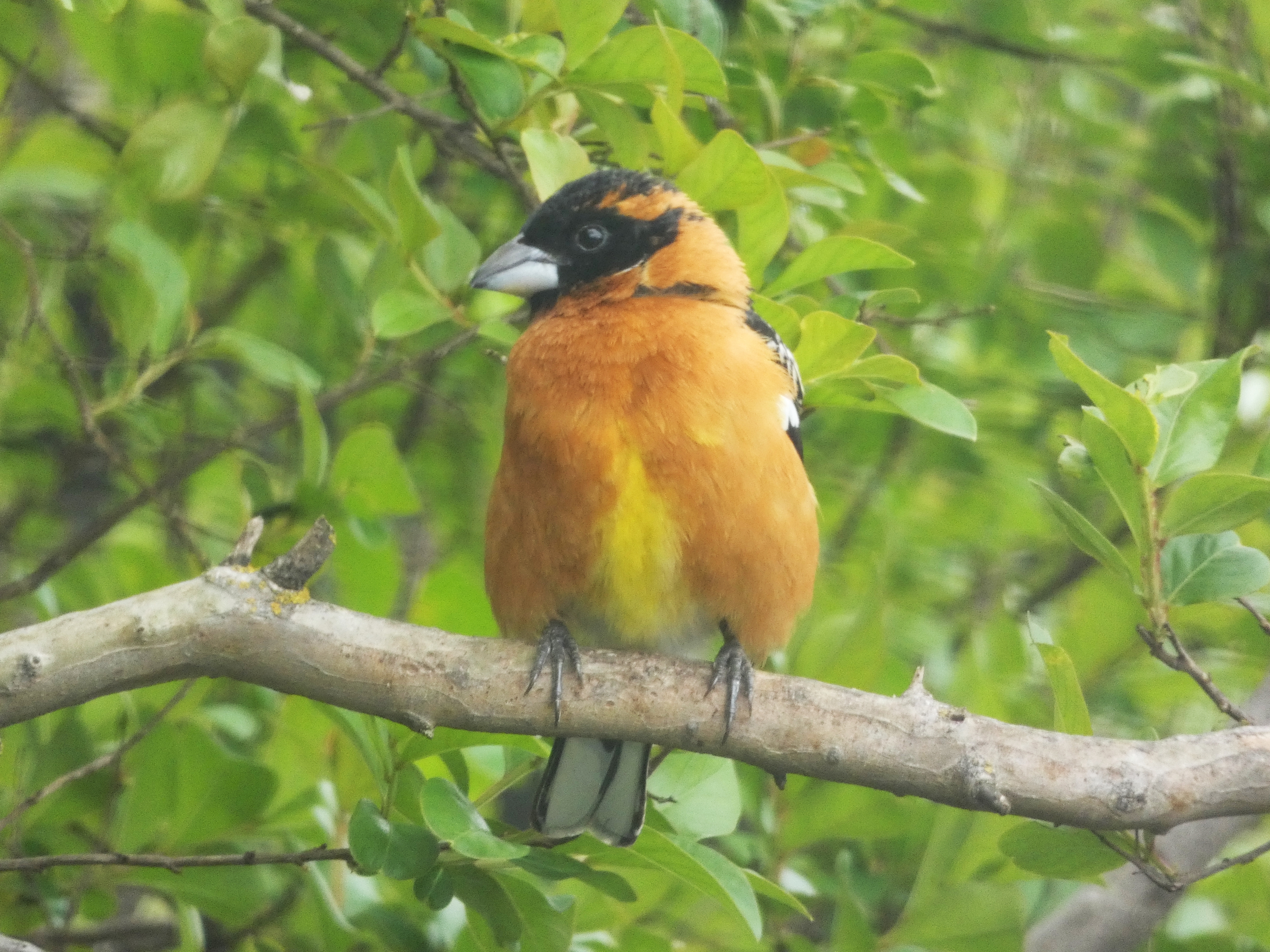
But wouldn't you know that backyards with feeders can actually attract some of those migrants? We've had them before in previous years, but it still takes your breath away when you actually see one of them. This morning it was a beautiful male Black-headed Grosbeak (Pheucticus melanocephalus).
We also saw some intensely colored American Goldfinches (Spinus tristis). We've had them in the yard on rare occasions in the past, but never got good enough photos to post on the blog.
It was nice of the birds to come to me, since I couldn't get out to them!
Tuesday, April 12, 2022
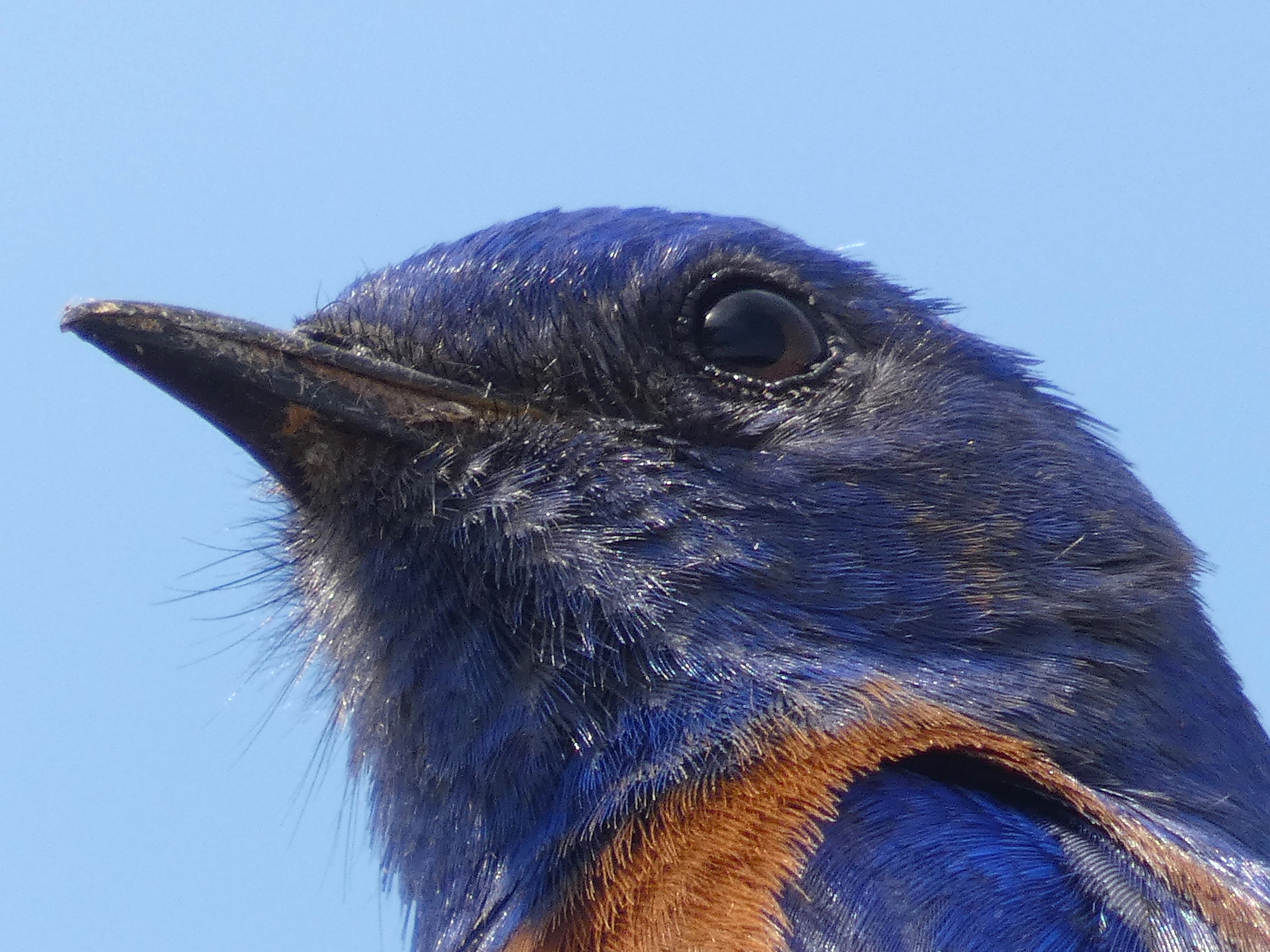
Just How Close Do You Want to Get? Western Bluebird on the Sabercat Trail
Such a nice moment on the trail!
Thursday, April 7, 2022
Finding that First "Special" Bird: Bullock's Oriole on the Tuolumne River
I have these conversations, sometimes imagined, sometimes real, where I feel just a little defensive and want to say "I'm not really a crazy birder, I'm just getting my regular exercise and I don't want to miss it if a really interesting bird or other animal shows up". But I actually am a crazy birder. But doing the same ritual practically everyday of walking at least two miles and counting birds along the way is not really that strange. Compare the strangeness of doing that with running on a treadmill in a gym every day. You run on top of the moving machine, and no scenery goes by. You maybe have a television on the side of the room to stare at, or you have earphones blaring music. To me that's pretty boring.
How cool is it that every single walk has the potential of becoming something wonderful? Like the dad said in Christmas Story, referring to his yet unopened grand prize, "Why there could be anything in there!" Sure, there are birds that one sees every single day throughout the year, the scrub jays, the doves, the mockingbirds, the starlings. But there are almost always little surprises, the birds you see only once in awhile: Spotted Towhees, Nuttall's Woodpeckers, Belted Kingfishers, or Cooper's Hawks. They add that little bit of spice that turns a mundane walk into an interesting one.
But then there are the migrants. They can only be seen during part of the year, some only during the winter, others in the spring and summer. New seasons bring the promise of that "first of season" sighting, the excitement of seeing a beautiful and spectacular bird after an absence of many many months. It's a neat moment that sometimes takes my breath away. It happened yesterday when I saw the first Bullock's Oriole (Icterus bullockii) of the new year. The bird is not totally rare, and I will probably see a few dozen of them over the next few months, but that first moment you realize what you are seeing is just plain special. Especially when they hang out long enough to get pictures.
Left unsaid of course is the even rarer potential of seeing a bird that you have never seen before, or one that no one in the county or state has ever seen. Climate change has resulted in some species ranging farther north than ever before, so the day may come when I will see something really special, like a Vermilion Flycatcher or Summer Tanager on the Tuolumne River. And that, my friends, is why I am "that guy" out there walking every day looking to the sky, instead of tromping on a machine at the gym.
Tuesday, March 8, 2022
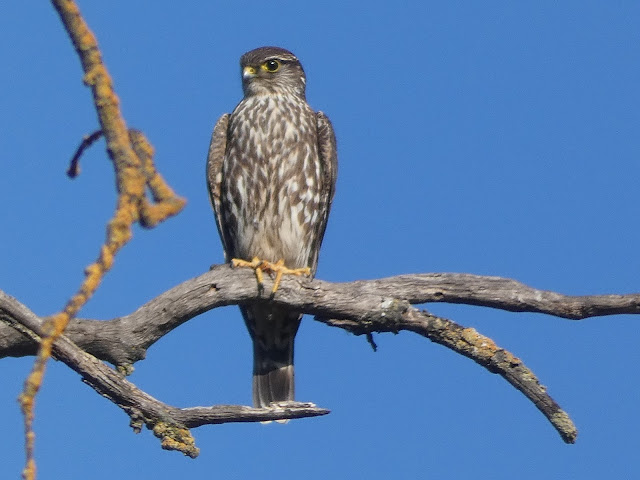
A Merlin on the Tuolumne River, for the Second Time This Year
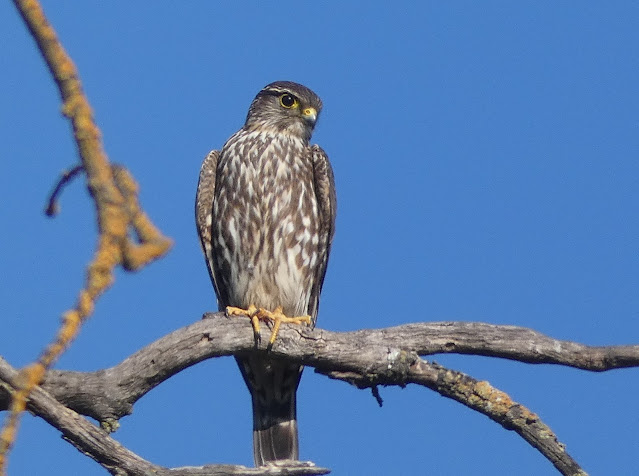
Merlins are the 'Lady Hawks' of Medieval times, but they are actually falcons, and like other falcon species, they have been used by falconers for years for hunting and hobby purposes. They underwent a severe decline because of the use of DDT in the fifties and sixties, but they have recovered nicely since the pesticide was outlawed.
It was a pleasant surprise to see one today.